Burst Pipe Repair in Northglenn, CO
A burst pipe turns a cold snap into an indoor flood. Water comes through ceilings, runs down walls, and pools in finished basements — and it keeps coming until the main valve is shut. Everything after that first shutoff is about doing the repair properly: finding every split the ice made, replacing the damaged section, and pressure-testing the line before walls and ceilings get closed back up.
The split is often not where the water shows. Ice cracks a pipe at its weakest point, which can be several feet from the stain on the ceiling — and a hard freeze sometimes cracks one line in two places. Your provider traces the run, checks the whole affected section under pressure, and repairs what the freeze actually damaged, not just the spot that's dripping today.
In Northglenn, burst pipes follow the local pattern: galvanized and early copper lines in 1960s and 70s ranch homes, frozen during an overnight arctic front, splitting at thaw — frequently in a basement ceiling or an upstairs wall, right above the finished rooms below.
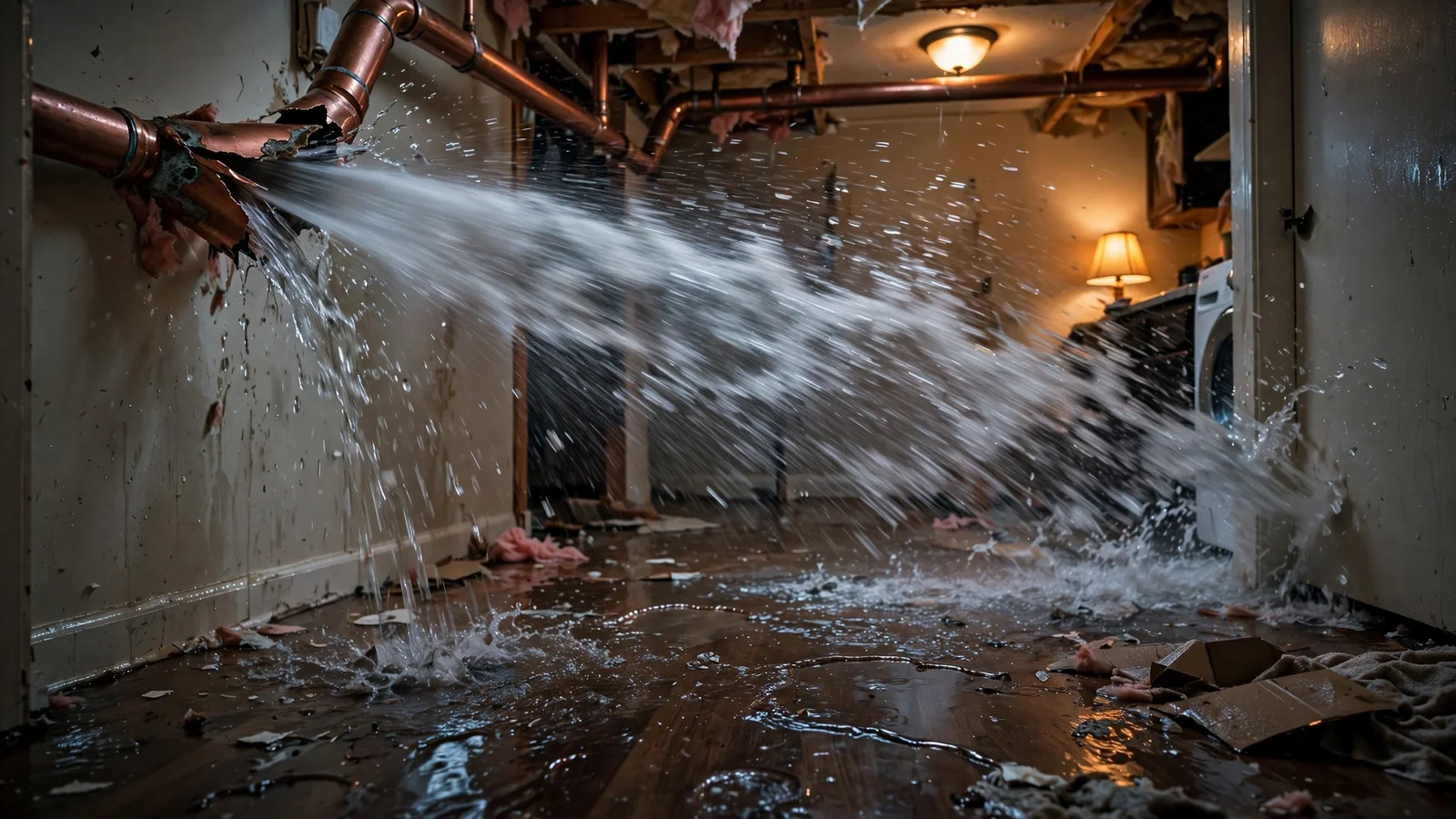
Signs a pipe has burst
- Water dripping or pouring from a ceiling or wall
- A water stain that is actively growing, or paint that bubbles and softens
- Sudden loss of water pressure at multiple fixtures
- The sound of running water inside a wall when nothing is turned on
- A water meter that spins with every fixture in the house off
- Standing water in the basement after a freezing night
How your provider repairs a burst pipe
1. Shutoff and assessment
With the water off, your provider maps where the water traveled and which run failed. Knowing the layout of the line matters — the visible leak is the symptom, and the split is the cause.
2. Locate every split
Ice can crack a line in more than one place. Your provider inspects the full affected run — including sections still hidden in walls and ceilings — so a second split doesn't surprise you a week later.
3. Cut out and replace the damaged section
The split section comes out and is replaced with sound pipe matched to your line. Your provider explains what they're replacing and why before the work begins.
4. Pressure test before closing up
The line goes back under full pressure and every joint and repaired section gets checked while it's still visible. Only then is it a finished repair — nobody wants to open the same ceiling twice.
Burst pipes in Northglenn homes
The burst-pipe calls in Northglenn cluster around the same story: a deep overnight freeze, a 1960s or 70s ranch with galvanized or early copper plumbing, and a thaw that reveals a split — very often in a basement ceiling or an upstairs bathroom wall, with a finished basement underneath taking the water. Galvanized lines tend to split lengthwise as the metal fatigues; copper tends to pinhole or crack at joints after repeated freeze cycles. Local pros know these failure shapes, which is why they check the whole run instead of just the loudest leak.
Need burst pipe repair in Northglenn?
One call connects you with a local technician. No forms.
(555) 234-5678📞 Call Now